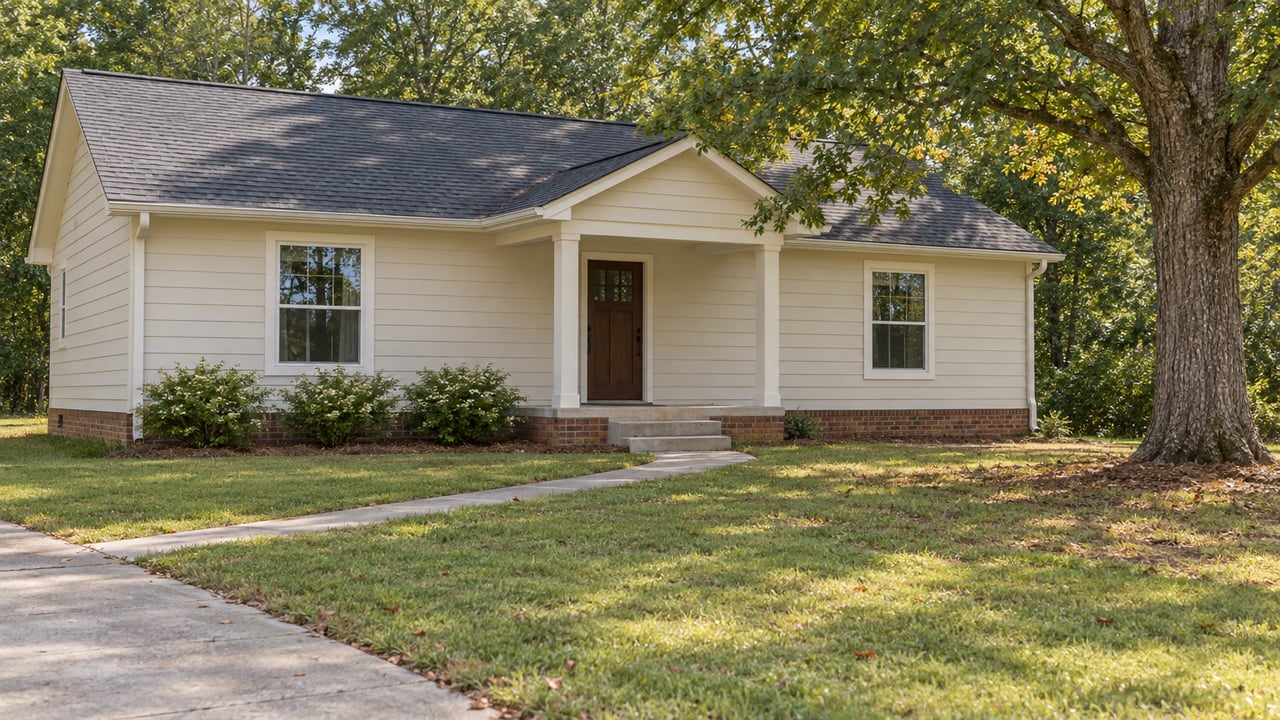
The Well and Septic Gap That Catches Paulding County Buyers Off Guard
October 1, 2026
October 1, 2026
According to SepticAndWell.com, Georgia does not require a septic inspection before you buy a home. Most buyers never learn this until their loan officer tells them the opposite: no functioning septic system, no closing. That gap between what the state requires and what the bank requires is where Paulding County deals stall, and it matters more this year than most, because the well feeding that septic system's twin is working through the driest stretch this part of Georgia has logged in decades.
Paulding County is not a place where this is a footnote. It is the baseline.
The Paulding County Health Department states it plainly on its own page describing sewage treatment systems: there is no sanitary sewer system available to the majority of properties in the county. If you are shopping in Dallas, Hiram, or further out toward Carroll and Haralson, you should assume septic and well until a listing proves otherwise, not the reverse.
That assumption shapes the deal in ways a buyer coming from an intown Atlanta condo won't expect. Two working systems, tank and drain field, well and pump, both privately owned, both maintained by the homeowner, both invisible until something goes wrong or a lender asks a question. Local companies like W&W Septic Tank Service, a family-owned operation that has served Dallas for more than 50 years, and ALK Septic Service LLC, run by Austin Kelley out of Dallas, exist because this demand is constant, not occasional. The Paulding County Environmental Health office, at 240 Constitution Boulevard in Dallas, issues the permits that govern new installs, repairs, and the inspections tied to real estate transactions.
Some newer subdivisions do sit on Paulding County Water's municipal water and sewer lines, which the county says now serves more than 60,000 customers. That distinction alone can be worth asking about before you write an offer, because it changes which of the costs below apply to you at all.
Here is the gap. Georgia has no statewide law requiring a septic inspection at the point of property transfer, and no Georgia county has codified a mandatory point-of-sale ordinance either. On paper, a septic inspection is optional.
In practice, FHA, VA, and most conventional lenders require proof of a functioning septic system before they will fund the loan. Your file will not close without that documentation, regardless of what state law says. Cash buyers are the only ones who can technically skip it, and even for them, skipping is a bet against a system that already has decades of use on it.
The document that satisfies most lenders is a Performance Evaluation Report, issued using the county health department's Form 14.L. You can get one two ways: through the county environmental health office for $400 to $600, or through a private inspector certified by the Georgia Department of Public Health for $300 to $500. A thorough evaluation takes two to four hours and covers tank pumping, compartment inspection, and drain field assessment.
| Cost item | Typical range | Arranged by |
|---|---|---|
| County septic Performance Evaluation Report | $400–$600 | Buyer, via county health department |
| Private DPH-certified septic inspection | $300–$500 | Buyer, via licensed inspector |
| Septic tank pump-out (often required before inspection) | $237–$375 | Buyer or seller, by negotiation |
| New well if replacement is needed | $5,000–$12,000 | Seller or buyer, by negotiation |
The pump-out is where buyers get surprised twice. Most systems need the tank pumped before an inspector can properly assess baffles and liquid levels, and that cost sometimes rides separately from the inspection fee. Ask upfront which quote includes it.
A failed septic inspection does not have to kill a deal, but it does hand someone a number they have to react to. A failing system can knock $10,000 to $30,000 off the purchase price, and that range is wide enough that the negotiation itself becomes the real transaction.
Buyers in this position generally have three paths: ask the seller to complete repairs before closing, negotiate a price reduction and handle repairs after closing, or set up an escrow holdback so funds are reserved until the work is done. Sellers facing a failed inspection often find that fixing the problem costs less than the discount a buyer will demand for absorbing the risk, which is part of why so many Paulding sellers order their own pre-listing evaluation rather than wait for a buyer's inspector to find it first.
None of this changes because Georgia law calls the inspection optional. The lender's underwriting checklist is the one that actually governs the closing date, and it does not care what the state statute says.
Georgia's Environmental Protection Division declared a statewide Drought Response Level 1 for public water systems on April 27, 2026, the first formal drought declaration of any kind since 2012. In an August 14, 2026 briefing, the EPD director chose to maintain that Level 1 status rather than ease it, a decision reflecting hydrologic conditions that had not meaningfully improved through the middle of the year.
Paulding County's own numbers back that up. Federal drought tracking places the county's January through June 2026 stretch as the 24th driest such period in 132 years of recordkeeping, with June alone ranking as the 50th driest June on record over that same span.
As reported in a City of Dunwoody news story, Danny Johnson, who manages the Metropolitan North Georgia Water Planning District, said this spring as the drought declaration went out across the region:
"Water is a shared resource, and during dry periods like this, every drop counts."
The same math scales down to a single well on a single lot in outer Paulding.
Public water systems answer to reservoir levels and river flows. A private well answers to how much water is sitting in the ground beneath one specific parcel, and that is a number a drought year actually changes. Wells serving Georgia homes typically need to produce 5 to 10 gallons per minute depending on household size, and 5E Pump and Well Service says most lenders use 5 gallons per minute as the financeable threshold. A well that cleared that bar in a normal year can test lower in a dry one, particularly if it's shallow. Well contractors working in Central Georgia report similar wells commonly running 150 to 300 feet deep, with total drilling costs of $5,000 to $12,000, a useful benchmark for what full replacement can run even though exact depth and cost in Paulding depend on the rock a driller hits on that specific lot.
A flow test performed during a drought tells you something a flow test performed two wet years ago never could. If a seller hands you documentation from 2021 or 2019, ask for a current one instead. The gap between those two numbers, in a year like this one, is the whole point.
The two systems are not independent of each other. Drinking water flows underground, and so does septic effluent, which is why well and drain field placement follow setback logic. A common industry benchmark calls for at least 100 feet between a septic drain field and a drinking well, with the well ideally sited uphill so groundwater tends to flow away from it rather than toward it.
Older Paulding properties sometimes predate the setback standards in place today. Well Watchers Well Pump Services says that in most jurisdictions those legacy systems are grandfathered in rather than forced into compliance. An inspector or lender may still note the distance for the file even when no violation exists. If you are buying a property with a well drilled decades ago, ask whether the seller has the original as-built permit on record with the county. That document is what an inspector compares the current system against, and unpermitted work is exactly the kind of detail that can derail financing at the last minute.
New wells go through a separate process entirely. Georgia Code requires a licensed well contractor to file an Intent to Drill notice with the county health department before drilling starts, and while there's no state permit fee for a residential well, the contractor has to be licensed. That rule exists in part because the water table under one lot connects to the water table under the next, which is the same logic behind the setback distances above.
Order the Performance Evaluation Report early rather than waiting for your lender to request it. Ask specifically when the well was last flow tested, and if the answer predates this year's drought conditions, request a current test rather than relying on old paperwork. Get the pump-out quote and the inspection quote as separate line items so you know what you're actually paying for. If either system comes back with issues, treat the repair estimate as a starting point for negotiation, not a dealbreaker on its own.
None of this is unusual for Paulding County. It's simply what a septic-and-well transaction requires here, this year, when the systems most of the county depends on are being tested by conditions the region hasn't seen in over a decade.
Does Georgia require a septic inspection before I can buy a home? No. There's no state or county law mandating one. Your lender's requirements are what actually make it necessary for most financed purchases.
What counts as a good well flow rate in Paulding County? Most residential wells need to produce 5 to 10 gallons per minute depending on household size, and 5 gallons per minute is the threshold most lenders use to call a well financeable.
Who pays for the septic inspection, buyer or seller? It's negotiable and tends to follow local market conditions rather than a fixed rule. Some sellers order a pre-listing evaluation to get ahead of the question.
If you're weighing a well-and-septic property anywhere from Dallas to the county line, I'd rather walk through the specific system on that specific lot with you than let a lender's letter be the first place you hear about it. Clay Thomas is a phone call away.
This article is general information, not legal, tax or financial advice. Consult a qualified professional about your situation.
Partner with Clay Thomas, an Emerald Elite Level Producer known for delivering exceptional results. With a strategic approach and market insight, he guides buyers and sellers with confidence.