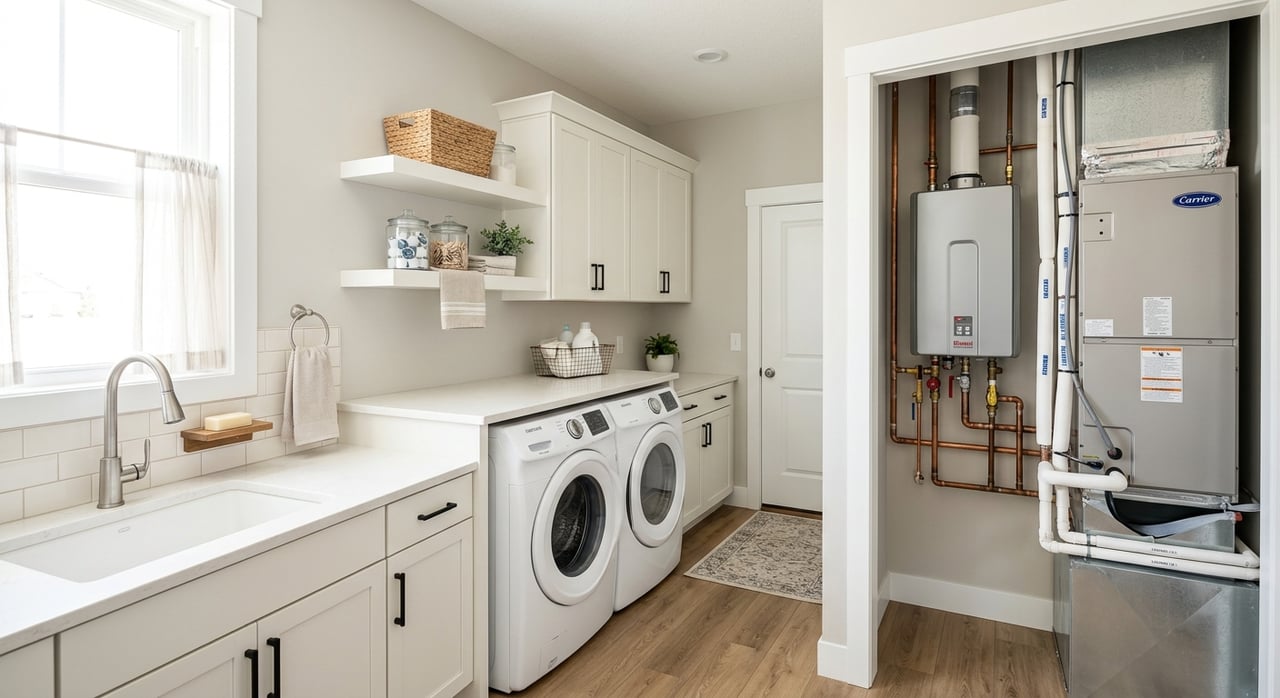
Paulding County Homeownership Costs to Budget For
July 16, 2026
July 16, 2026
Buying a home in Paulding County is exciting, but your mortgage is only part of the picture. If you want to feel confident in your monthly budget, it helps to look beyond principal and interest and plan for the real day-to-day costs of owning a home. When you understand taxes, utilities, maintenance, and neighborhood fees upfront, you can choose a home that fits your life for the long run. Let’s dive in.
A home can look affordable at first glance, then feel tighter once the other bills start showing up. That is why it helps to think in terms of total carrying cost, not just the mortgage payment.
In Paulding County, your ongoing cost can include property taxes, electricity, water and sewer, sanitation, maintenance savings, and possibly HOA dues. Some of these costs vary by location, so two homes with similar prices may have very different monthly budgets.
Property taxes are one of the biggest ongoing ownership costs to plan for. In Georgia, real property is assessed at 40% of fair market value, and local millage rates are then applied to that assessed value.
In Paulding County, the total bill can include more than one levy depending on where the home is located. The county-wide net M&O millage rate shown in the 2025 digest is 4.300 mills, the Paulding County School District FY2025 budget assumed 17.675 mills for M&O, and the City of Dallas set its 2025 millage rate at 6.5 mills.
That means your tax bill may look different if you buy in unincorporated Paulding versus inside Dallas city limits. Dallas homeowners can receive both county and city tax bills, so location matters when you compare homes.
Paulding County property owners received the 2026 Annual Notice of Assessment on June 2, 2026, and the appeal deadline was July 17, 2026. County taxes are due by November 15, while Dallas city taxes are due by December 20.
These dates matter because they affect how you track deadlines, escrow changes, and annual planning. Even if your lender escrows taxes, it still helps to know when local bills are issued and due.
A fixed-rate mortgage does not guarantee a fixed total payment. Paulding County budget materials note that taxable values are reviewed annually and may be reassessed when recent local sales support higher market values.
In plain terms, your tax bill can rise even when your loan payment stays the same. That is one reason it is smart to leave room in your monthly budget instead of planning too tightly.
Homestead exemptions are not automatic in Paulding County. To qualify, you must own and occupy the home as your legal residence as of January 1, and you must file for the exemption.
The county lists local exemptions for county, school, Dallas, Hiram, and Braswell levies, along with the statewide floating homestead exemption for eligible homeowners age 62 and older. Paulding County also notes that late filings are generally applied to the following tax year, so timing matters.
Utilities are another important part of your monthly ownership budget. In Paulding County, electric, water, sewer, and sanitation can add up quickly depending on the home and where it is located.
Your actual bills will depend on the property’s size, age, insulation, system efficiency, and your household habits. That is why it helps to ask practical questions before you buy, especially if you are comparing older homes, larger homes, or properties with different utility setups.
Electricity is often one of the largest recurring utility bills. The U.S. Energy Information Administration reported Georgia’s residential electricity price at 15.01 cents per kWh in March 2026.
That number gives you a useful starting point, but your bill will still depend heavily on usage. HVAC efficiency, insulation quality, thermostat settings, and square footage can all make a noticeable difference from one home to the next.
Paulding County Water’s 2026 fee schedule lists a $9.80 residential base charge for water. It also uses tiered water charges of $10.95, $12.04, and $13.16 per 1,000 gallons.
For sewer, the schedule lists a $4.25 residential base charge and $9.47 per 1,000 gallons. The county’s published 6,000-gallon example totals $75.50 for water and $61.07 for sewer before late fees or other charges.
Those sample figures are helpful because they show how water and sewer can become a meaningful line item in your monthly budget. If you are buying a larger home or expect higher water usage, it is worth building in extra room.
If you buy inside Dallas city limits, sanitation may be a separate monthly charge. Dallas’s 2026 fee schedule lists residential garbage at $18 per can, plus a $65 sanitation deposit.
The city also lists a garbage-only weekly pickup option at $65. This is another reason two similar homes can carry different monthly costs depending on the municipality.
One of the easiest costs to overlook is maintenance. It may not arrive as a neat monthly bill, but it is still a real part of owning a home.
Fannie Mae recommends budgeting 1% to 4% of a home’s value per year for maintenance, repairs, and replacements. That range can help you prepare for both routine upkeep and larger items that wear out over time.
Maintenance is not just for cosmetic updates. It is the reserve that helps you handle HVAC service, roof wear, plumbing issues, exterior paint, gutters, landscaping, and appliance replacement before small problems become expensive surprises.
If you are buying an older property, a larger home, or a home with more exterior features to maintain, you may want to plan toward the higher end of that range. A newer home may need less immediate work, but it still makes sense to save consistently.
If the property is in a homeowners association, be sure to include that fee in your real monthly budget. HOA dues can be charged monthly, quarterly, or annually.
These fees often help cover items like ground maintenance, common-area upkeep, community facilities, and lawn and garden care. What matters most is verifying exactly what the dues include before you decide a home is affordable.
This is especially important when you compare newer subdivisions, townhomes, and amenity-focused communities. Two homes with similar prices may feel very different financially once HOA costs are added in.
If you are trying to decide what price range feels comfortable, start with the full monthly picture. A practical approach is to add together:
This kind of budgeting gives you a more realistic view of affordability. It can also help you avoid becoming house-rich and cash-tight after closing.
Before you make an offer in Paulding County, it helps to ask a few cost-focused questions. These can make your budget much clearer.
These questions will not tell you everything, but they can help you compare homes more accurately. They also make it easier to choose a payment range that still feels comfortable after move-in.
Just because you can qualify for a certain payment does not mean you will enjoy living with it. The goal is not simply to buy a home in Paulding County. The goal is to own one with confidence and enough breathing room for real life.
When you look at taxes, utilities, maintenance, and neighborhood fees from the start, you can make a smarter decision and avoid surprises later. If you want help comparing homes with the full cost picture in mind, Clay Thomas can help you think through the details with steady, local guidance.
Partner with Clay Thomas, an Emerald Elite Level Producer known for delivering exceptional results. With a strategic approach and market insight, he guides buyers and sellers with confidence.